When preparing for a factory visit, site audit, negotiation, training program, or international event, you’re often faced with a deceptively simple question: Should we hire interpreters locally, or fly in specialists from another region?
It’s a decision that goes far beyond logistics. The right interpreter setup influences cost, project efficiency, communication clarity, cultural accuracy, and the overall success of your engagement. At Interpret Group, we’ve supported multilingual operations in more than 200 cities worldwide, and we’ve seen just how much the right choice can elevate an international program.
Below is a practical guide to help you make a confident and informed decision.
What Are Local and Flown-In Interpreters?
Local interpreters live and work in the same city or region where your assignment will take place.
Flown-in interpreters travel from another city or country to support your meeting or event when the needed expertise isn’t available locally.
Both options bring distinct strengths to your project. The key is understanding which one aligns best with your content, budget, and business goals.
Advantages of Hiring Local Interpreters
Lower Overall Cost
Because local interpreters do not require airfares, hotel accommodation, per diems, or ground transportation, they typically offer a more cost-efficient setup. This is especially valuable for short meetings, one-day training courses, or routine audits where travel-related expenses may exceed the interpreting fees themselves.
Strong Cultural and Regional Knowledge
Local interpreters bring an intuitive understanding of regional customs, workplace norms, and linguistic nuances. For factory tours, community engagements, or government meetings, this cultural fluency can make communication smoother and reduce the risk of misunderstanding.
Easy Coordination for Short-Notice Assignments
When your team needs support quickly, perhaps due to a last-minute visit from leadership or an urgent compliance review, local interpreters can often mobilize faster than flown-in specialists. Their proximity helps reduce scheduling friction and ensures greater flexibility.
More Environmentally Responsible
Choosing local talent helps reduce your project’s travel footprint. For organizations prioritizing sustainability, especially those reporting under ESG frameworks, this is a tangible way to align multilingual operations with broader environmental goals.
Advantages of Flying In Interpreters
Expanded Access in Remote or Smaller Cities
Not every location has interpreters who specialize in technical, scientific, or high-stakes subject matter. In industrial zones, offshore facilities, or small markets, flying in interpreters may be the only reliable way to secure the expertise required.
Access to Top Specialists
For medical conferences, complex depositions, regulatory inspections, or advanced engineering discussions, expertise matters more than geography. Flown-in interpreters often have advanced training, prior experience working with a particular client or deep industry knowledge, and skills that significantly improve communication outcomes when precision is critical.
Experience with Multinational Teams
Interpreters who regularly travel for corporate assignments are typically familiar with international workflows, cross-border team dynamics, and the communication expectations of global organizations. They understand the pace, structure, and professionalism needed in high-level meetings.
Consistency and Security When It Matters Most
Organizations dealing with highly complex or classified topics often require interpreters who are already familiar with their terminology, communication style, and internal culture, and who have been fully vetted and cleared to handle sensitive information. Working with the same interpreter team on long-term projects, often across multiple locations, provides consistent command of context, language, and interpersonal dynamics across every session, while also reducing security risks.
How Global Teams Can Build Their Best Interpreter Setup
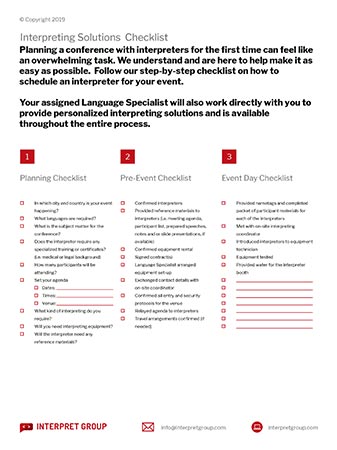
Making the right choice for your specific requirements doesn’t need to be complicated. Use these guidelines to evaluate what your event or project requires:
Assess the Technical Complexity
The more specialized the content, e.g., legal hearings, engineering walkthroughs, compliance inspections, high-stakes negotiations, the more important it is to secure interpreters with the exact subject-matter expertise you need. If that level of expertise is available locally, you’re in excellent shape. If not, flying in interpreters is a smart investment.
Check Local Availability Early
Even major cities sometimes experience shortages during peak seasons (conferences, trade shows, political events). Confirm early whether the required language pair and the right specialization are available in the location.
Compare True Total Costs
Budget conversations shouldn’t stop at travel expenses. Consider the:
- financial risk of miscommunication;
- potential need for corrective meetings;
- value of cultural fluency; and
- the strategic importance of the event.
Sometimes the lowest upfront cost isn’t the best long-term choice.
Book Early for Specialized Assignments
Interpreters with niche expertise are in high demand and often booked months ahead. Securing your team early ensures you get the right people, whether local or flown in. Early planning also gives your interpreters the time they need to review materials, align on terminology, and prepare for technical content.
Choosing the Approach That Sets You Up for Success
There’s no one-size-fits-all answer. The best choice depends on your goals, the complexity of your content, and the realities on the ground. Some programs thrive with strong local interpreters who deeply understand the region. Others need the precision of flown-in specialists with years of experience in your specific technical field.
Interpret Group has long helped global teams evaluate these options, leveraging experience across various regions and sectors. Our work demonstrates the importance of thinking beyond the next international event and considering how each decision fits into a long-term communication plan.
A sustainable strategy benefits from guidance that considers both immediate needs and the broader context in which an organization’s communication demands will continue to evolve.