An RFP issued on Friday for interpreting services the following Tuesday is not unusual. By the time it reaches a language service provider, the venue has often been secured, invitations have been sent, and the program is already taking shape. Interpreting is frequently one of the last services to be procured. That timing affects far more than scheduling. It can influence proposal quality, interpreter availability, and even the overall cost of the assignment.
From the client’s perspective, the process may seem straightforward: identify qualified interpreters, evaluate proposals, and confirm the assignment. Behind the scenes, however, delivering a successful interpreting assignment involves a series of operational decisions that influence quality, logistics, and cost well before the event begins. As timelines compress, the focus shifts from designing the best solution to delivering the best solution possible within the time available.
Limited Notice Reduces Interpreter Availability
One of the most common misconceptions about interpreting procurement is that qualified interpreters remain available until the day of an event. For large multilingual events or assignments requiring specialized subject knowledge, preferred interpreters may be committed weeks or months in advance.
The challenge is not simply finding someone who speaks the required language. It is finding someone with the right combination of subject matter knowledge, interpreting experience, and availability.
Consider an international conference requiring simultaneous interpretation in English, Japanese, Korean, and Mandarin. A provider is not simply identifying four interpreters assigning one interpreter to each language. They may be assembling multiple interpreter teams, confirming the required language pairing, planning balancing rotations, matching subject-area expertise to individual sessions, and coordinating consistent coverage throughout the program. ensuring consistent coverage across every language pair.
With several weeks’ notice, those decisions can be made deliberately. With only a few days to prepare, the focus shifts to building the strongest team from the qualified interpreters who remain available.
A Strong Proposal Requires Time
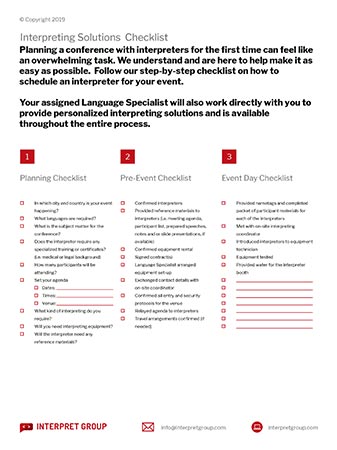
An interpreting proposal should do more than confirm availability and provide pricing. Experienced providers review the event as a whole. They assess the event format, language requirements, delivery method, technical infrastructure, interpreter scheduling, participant needs, and operational risks that may not yet have been considered.
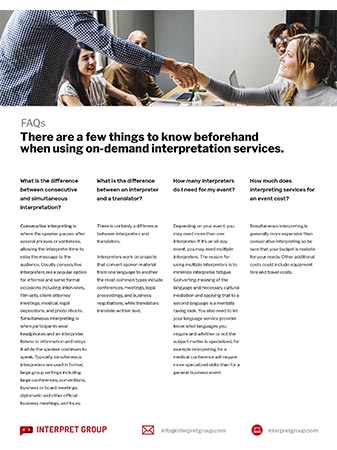
Often, that review leads to better decisions before the event even begins. For example, an RFP may request consecutive interpretation because it appears to be the simplest option. Once the program is reviewed, however, it may become clear that simultaneous interpretation would better support the agenda, particularly where multiple presentations or panel discussions are scheduled back-to-back.
Similarly, a virtual meeting involving participants across several countries may require additional planning around time zones, interpreter rotations, or platform capabilities that were not addressed in the original brief. These are the kinds of recommendations that improve an event without changing its objectives. They simply require time to evaluate the assignment properly.
Finding Interpreters Is Only the First Step
Securing qualified interpreters is an important milestone, but it is only one part of delivering a successful interpreting assignment.
Depending on the event, providers may also be coordinating remote simultaneous interpreting platforms, audiovisual requirements, interpreter consoles or receivers, multilingual presentation materials, participant access, technical rehearsals, and contingency plans should speakers, schedules, or language requirements change.
Much of this work is invisible to attendees, but it often determines whether multilingual communication feels seamless or becomes a distraction. The less time available before an event, the less opportunity there is to review these elements thoroughly and resolve potential issues before they affect participants.
Procurement Timing Can Limit Cost Options
Price is understandably one of the first considerations during procurement. What is less obvious is how much flexibility depends on when an assignment is confirmed.
When providers receive sufficient notice, they can secure specialist interpreters before calendars become constrained, consolidate project planning, and organize technical resources efficiently.
A request received only a few days before an event changes that equation.
Project managers may have to reshuffle schedules, work from a narrower pool of qualified interpreters, and resolve logistics that would normally be handled over several weeks.
This does not mean every urgent request will cost more. It does mean there are fewer opportunities to optimize the project while maintaining the same level of quality, flexibility, and operational efficiency.
Early Engagement Create More Flexibility
Most procurement teams are working within timelines they do not entirely control. Budgets are approved late, programs evolve, speakers change, and interpreting requirements are sometimes identified only after other aspects of an event have been finalized.
The goal is not to eliminate urgent requests altogether. They are an unavoidable part of the industry. What makes the greatest difference is engaging an interpreting provider as early as practical, even if every detail has not yet been confirmed.
Many organizations begin that conversation while agendas are still evolving or participant numbers are being finalized. That allows providers to advise on interpreting modes, reserve specialist interpreters where appropriate, identify technical considerations, and refine recommendations as the project develops.
By the time the formal RFP is issued, both parties have a clearer understanding of the event’s requirements, reducing uncertainty during procurement and creating greater flexibility as planning continues.
Quality Is Established Long Before the Event Begins
Successful interpreting assignments are rarely the result of decisions made in the final week before an event. They are the product of thoughtful planning, careful interpreter selection, realistic scheduling, technical preparation, and ongoing collaboration between the client and the language service provider. Urgent requests will always exist, and experienced providers understand how to respond when timelines become compressed.
The strongest outcomes, however, come from having enough time to ask the right questions before solutions need to be delivered. For organizations issuing RFPs for interpreting services, early engagement is not simply about securing availability. It creates the opportunity to evaluate options, refine the approach, and build an interpreting solution around the needs of the event rather than the constraints of the calendar.
The difference between an RFP issued six weeks before an event and one issued six days before an event is rarely just time. It is the number of options still available.